
 Oleg Zdendiak, ownerpersonally responsible for every case
5,0 129 reviews on Google
Translated from Ukrainian “You were always available, whatever the time…” — Віта Х. “Everything was organised with great dignity, professionally and with attention to every detail.” — Тамара Ю. “Every question was resolved promptly, with respect and attention to detail.” — Olha B. “…your support, compassion, sense of responsibility and professionalism meant a great deal to us.” — Ірина Б. “It all went quickly and professionally…” — Оля К. In brief
- As a rule, the consul of Ukraine registers the death of a Ukrainian citizen abroad and issues a Ukrainian death certificate.
- The consul also issues a certificate for the social protection authorities, so that the family can receive the funeral allowance in Ukraine.
- To cross the Ukrainian border you need a certificate that the body and the coffin contain no prohibited items. It is issued by the authority of the country of death, and the Ukrainian consulate legalises it.
- The consulate helps with bringing the deceased home. The transport itself (the coffin, the vehicle, the local permits) is arranged by the family or by us acting on its behalf.
- We prepare the documents for the consulate, submit them and collect them when they are ready. You do not have to deal with queues and translations yourself.
What the consul does when a person has died
Registers the death
The death of a Ukrainian citizen abroad is registered by the consul of Ukraine. It does not have to be the consul closest to the hospital. The law allows the death to be registered at the person's last place of residence, at the place of death, at the place where the body was found, or at the place of burial. So we choose the embassy or consulate where the case will move faster.
Relatives can apply to the consul, and so can the authorities of the country where the death occurred, the hospital or other people. The registration is based on two documents from the country of death: a medical document stating the death and a death certificate issued by the local authorities.
The consul does not accept just any foreign document. It must carry an apostille or be legalised, unless a treaty between the two countries exempts it from this. It must also be translated into Ukrainian, and the translation must be certified as well. You will find more on this in the article “Death certificate abroad”.
Issues the Ukrainian death certificate
After registering the death, the consul draws up a Ukrainian document. The death certificate is handed to close relatives, or it is sent with the deceased's passport to the Ministry of Foreign Affairs of Ukraine and from there to the family.
There is no consular fee for registering the death or for the first certificate.
Sometimes people learn of a death late, or the documents take a long time to collect. If more than a year has passed since the death, the consul still registers it, with the note “late registration” («Реєстрація з пропуском строку»).
Gives the certificate for the funeral allowance
Together with the registration, the consul issues a certificate for the social protection authorities. With it, the family can apply in Ukraine for the funeral allowance. People often forget about it in the first days and then have to ask for it separately. We will remind you and make sure the certificate is among the documents.
Returns or passes on the deceased's documents
After the death is registered, the passport and other documents of the deceased are sent to the Ministry of Foreign Affairs of Ukraine or handed to the person accompanying the body. In Germany, for example, the embassy enters a note about the death in the deceased's passport. In the Netherlands, the embassy asks for the passport to be brought in so that it can be cancelled, once the death certificate has an apostille and a translation.
Looks after the property
The consul of Ukraine helps to safeguard the belongings and the money that the person left behind. Tell the consulate if belongings were left in rented accommodation or at work.
We work out your price
Call or leave your number.
Documents for the border: why the consul is needed
Ukraine lets a body cross its border under its own law. The customs officer is shown two documents:
- the death certificate, or another document from a competent authority that confirms the death;
- a certificate that the body and the coffin (urn) contain nothing that is prohibited from being taken across the border.
When a body is brought into Ukraine, this certificate is issued by the authority of the country where the death occurred, and the Ukrainian consulate or embassy legalises it. Without this step the deceased will not be allowed across the Ukrainian border. That is why the consulate is a required step in every transport, even when all the local permits are already in place.
A short written statement is added to these documents for customs. The deceased must be in a hermetic metal coffin, which is put under official seal. There is a separate article about the coffin: “Coffin and embalming for bringing a body to Ukraine”.
How this works in different countries
The name and the form of the consular document differ from country to country. A few examples:
- Germany. The embassy issues an accompanying letter for transporting the coffin to Ukraine. For it you need the deceased's passport, the death certificate with an apostille and a translation, the body passport (Leichenpass) with an apostille and a translation, a document confirming that there are no foreign items in the coffin, and a medical certificate that the deceased had no infectious disease.
- Austria. The consular section of the embassy can issue certificates for crossing the border. You need the Sterbeurkunde (death certificate), the Leichenpass, an apostille, a declaration that there are no foreign items in the coffin, a Ukrainian translation and the deceased's original passport.
- Italy. The Consulate General issues an authorisation (nulla osta): the consulate's consent, for the Italian authorities, to the transport of the body. The original is handed to a relative or to us under the family's power of attorney.
- Spain. On the basis of the documents (among them the death certificate with an apostille), the embassy issues a certificate for bringing the coffin or the urn into Ukraine. Without the consent of the consulate of the destination country, the Spanish health service will not allow the deceased to be taken out of Spain.
- France. The consulate issues a certificate for transporting the coffin or the urn. The transport requires a funeral home with a French licence. The embassy can translate the French death certificate into Ukrainian itself, if the body or the ashes are being taken to Ukraine.
In other countries the rules are similar, but the details differ. To find out what your country requires, see its page in the section “Countries”, or simply call us.
What the consul does not do
The consulate helps. It finds out the circumstances of the death, informs the relatives, prepares the documents and helps to bring the deceased, or an urn with ashes, back to Ukraine. But people often expect things from it that it does not do.
- The consulate does not organise the transport. It helps with bringing the deceased home, but the coffin, the preparation of the body, the vehicle and the local permits are arranged by the family or by us acting on its behalf. In Germany, for example, the documents can be prepared by us, acting for the relatives.
- It does not replace the local permits. The permit to take the body out is given by the authority of the country of death: the health service, the prefect or the coroner, depending on the country. The Ukrainian consulate works alongside them, not instead of them.
- Not every consul carries out consular acts. In many countries Ukraine has honorary consuls. An honorary consul usually does not prepare documents. For that you need an embassy or a consulate.
How long the registration at the consulate takes depends on how quickly the local documents, the apostille and the translation are ready. So we run the local part and the Ukrainian part in parallel, not one after the other.
Call us, day or night
Languages: Ukrainian, English, Polish, German. The same number in messengers.
Does the embassy have a hotline?
Some embassies have a separate phone number for cases when a Ukrainian citizen dies. The number is on the embassy's page:
- Poland. The embassy has a hotline for cases when a Ukrainian citizen dies. Embassy page (in Ukrainian).
- France. The consular section has a round-the-clock hotline for cases of death, danger to life or detention. Embassy page (in Ukrainian).
- Lithuania. The consular section has a hotline only for a threat to the life or the death of citizens. Embassy page (in Ukrainian).
We will give you the hotline number as soon as you call. If you have already called the embassy, good. You can then call us: we will take over the case and do the rest.
Where the Ukrainian consulates in Europe are
Here are the embassies and consulates of Ukraine in the countries we most often bring the deceased home from. Before you apply, we always check the address and the reception hours.
| Country | Embassy | Consulates |
|---|---|---|
| Poland | Warsaw | Consulates General in Wrocław, Kraków and Lublin; a consulate in Gdańsk |
| Czechia | Prague | A consulate in Brno |
| Slovakia | Bratislava | — |
| Romania | Bucharest | — |
| Lithuania | Vilnius | — |
| Austria | Vienna | — |
| Germany | Berlin | Consulates General in Hamburg, Frankfurt am Main, Düsseldorf and Munich |
| Belgium | Brussels | Honorary consulates |
| The Netherlands | The Hague | Honorary consulates |
| France | Paris | Honorary consulates |
| Denmark | Copenhagen | An honorary consulate (usually does not prepare documents) |
| Switzerland | Bern | An honorary consulate |
| Italy | Rome | Consulates General in Milan and Naples |
| Spain | Madrid | A Consulate General in Barcelona; a consulate in Málaga |
| The United Kingdom | London | A consulate in Edinburgh |
| Ireland | Dublin | — |
| Croatia | Zagreb | — |
| Bulgaria | Sofia | — |
An honorary consul is not the same as a consulate. To register a death and to legalise the documents for the border, you usually have to go to an embassy or a consulate, not to an honorary consul.
How we work with the consulate for you
We find out where the documents are now
We ask what the hospital, the police or the local civil registry office have already issued. If nothing has been issued, we start with the local registration of the death.
We arrange the apostille and the translation
We arrange the apostille for the local documents, as the consul requires, and translate them into Ukrainian. How we handle the whole package is on the page “Arranging the documents to bring the deceased home”.
We prepare the package for the consulate
We collect the certificate of no prohibited items, the deceased's passport and the family's documents. We tell you in advance if a signature is needed from you personally.
We submit and collect
We collect the Ukrainian document for the border, the death certificate and the certificate for the funeral allowance.
We take the deceased home
We do the customs clearance at the border ourselves. The body's journey home to Ukraine takes from 24 hours after collection. If part of the way is by air, the air leg takes from 2.5 hours.
If you have already started on your own and something has got stuck, call us too. We will tell you what is missing and pick up from where you stopped.
Questions about the consulate
Do I have to go to the consulate if the death has already been registered abroad?
To transport the deceased you need the consulate in any case: it legalises the certificate of no prohibited items for the Ukrainian border. Registration of the death by the consul also gives you a Ukrainian death certificate and the certificate for the funeral allowance. We will tell you what makes sense in your case during the first conversation.
How much does it cost to register a death at the consulate?
The consulate charges nothing for registering the death or for the first certificate. The apostille and the translation of the local documents are charged separately from the consular fee, but when we arrange the transport we prepare them ourselves, and they are already in the price. We will tell you in advance what the transport price includes, so that there are no surprises.
Who can apply to the consul?
Relatives, the authorities of the country where the death occurred, the hospital or other people. We can prepare the documents for the transport on behalf of the relatives. This is how we work.
Do I have to go to the consulate in person?
Mostly not. If the consulate requires a signature or a statement from a relative in person, we will tell you in advance and explain how to do it without extra trips.
How long does the consular part take?
It all depends on the local documents: when the certificate is issued, and how long the apostille and the translation take. We run the local part and the consular part in parallel, so that no days are lost.
Which consulate should I apply to if the country has several?
The death can be registered at the place of death, of residence, where the body was found or of burial. So you have a choice. We will tell you where to apply in your case.
What should I do with the deceased's passport?
Do not throw it away, and do not leave it at the hospital without a copy. The consulate needs the passport. After the registration it is sent to the Ministry of Foreign Affairs or handed to the person accompanying the body. In some countries the embassy enters a note about the death in the passport or cancels it.
Will the consulate pay for the transport?
The consulate helps with bringing the deceased home, but the transport itself is arranged by the family or by us on its behalf. Who usually pays is explained in the article “Who pays for bringing a body home from abroad”. Please also check whether the person had a policy that covers repatriation. You will find more in the article “Insurance and bringing a body home”.
The person died more than a year ago. Can the death still be registered?
Yes. The consul registers such a death, with the note “late registration” («Реєстрація з пропуском строку»).
Tell us what happened
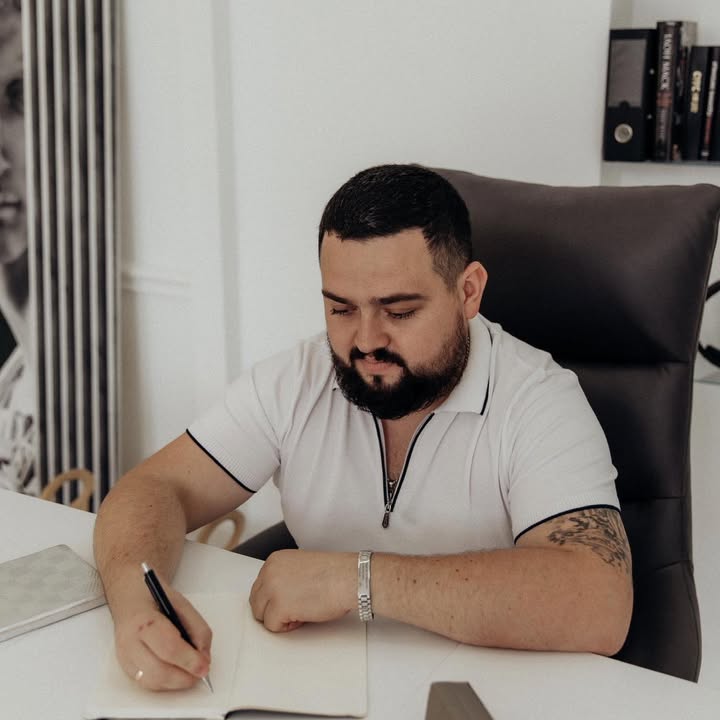
Oleg Zdendiak and the team. We explain the next steps.
We will contact the consulate for you
Tell us in which country and city the death occurred. We will call you back, find out which documents you already have and tell you what is missing.