Repatriation of the deceased from Switzerland to Ukraine
XREQUIEM takes the deceased home from any Swiss canton to your town in Ukraine, from €3,300 for the whole way. We obtain the cantonal Leichenpass, seal the coffin and prepare the papers for the Ukrainian border. By road through Austria or Germany, the body reaches home from 24 hours after collection.
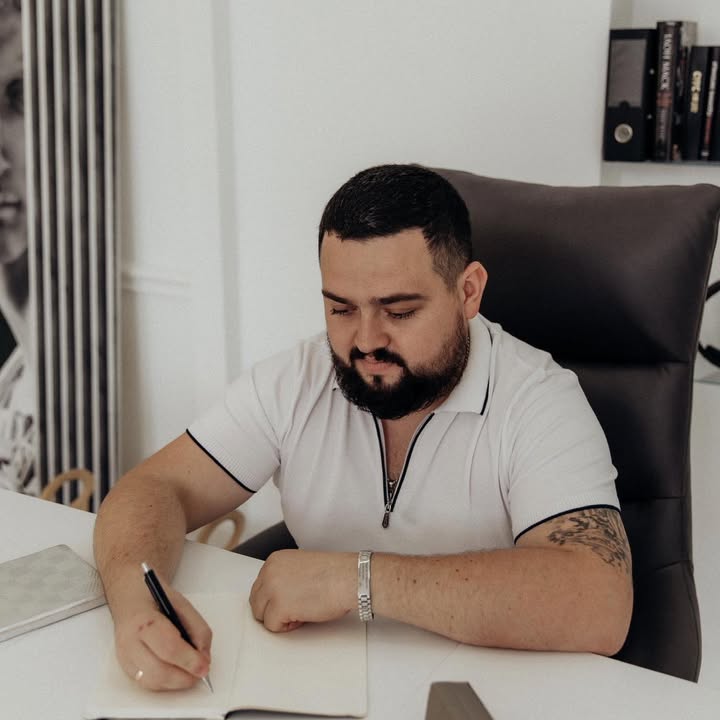
Oleg Zdendiak, ownerpersonally responsible for every case
5,0★★★★★129 reviews on Google
Translated from Ukrainian
“You were always available, whatever the time…”
— Віта Х.
“Everything was organised with great dignity, professionally and with attention to every detail.”
— Тамара Ю.
“Every question was resolved promptly, with respect and attention to detail.”
— Olha B.
“…your support, compassion, sense of responsibility and professionalism meant a great deal to us.”
Documents of the country of death and the consulate
Preparation of the body
Zinc-lined transport coffin
Transport to your town
Coffin of your choice and urn free of charge
No prepayment
What changes the total: the city and distance, the route (road or air), the country’s documents, preparation of the body. More about prices →
Summary. In Switzerland each canton decides which office issues the Leichenpass, the permit to take a body out of the country. A hospital or care home reports the death to the civil registry office (Zivilstandsamt) itself, and that office informs the Embassy of Ukraine in Bern. For our border we add the apostilled death certificate with a translation and the certificate of no foreign objects. The whole way home costs from €3,300, and a funeral in Ukraine is extra. We drive through Austria or Germany or add an air leg (from 2.5 hours). Home from 24 hours after collection.
Switzerland is not a member of the EU and has its own rules for transporting the deceased. The permit to take a body out of the country, the Leichenpass (body passport), is issued by cantonal authorities, not by a single national service. So the first thing we find out is in which canton the death occurred.
You call us
Tell us the canton and the town. If the death was in a hospital or care home, it has already reported the death to the civil registry office. We name the price on the same call.
The medical certificate of death
Everything starts with the Ärztliche Todesbescheinigung.
A burial permit, if one is needed
If the death is unnatural or the cause is unclear, the canton requires this permit before it issues the Leichenpass.
Placing in the coffin and sealing
We draw up a report and confirm that the coffin contains only the remains of the person named and their personal belongings.
The Leichenpass
The cantonal permit to transport the body abroad.
The papers for the Ukrainian border
The cantonal State Chancellery (Staatskanzlei) puts the apostille on the death certificate, then it is translated. The embassy in Bern legalises the certificate of no prohibited items.
The journey home
By road or with an air leg. Then we hand the deceased over to the family in Ukraine.
To take a body out of Switzerland you need a permit, the Leichenpass. The procedure is different in every canton. Here is how it works in Aargau and Solothurn, as an example. We find out the rules of your canton on the first day.
Canton of Aargau
In Aargau the Leichenpass comes from the Zivilstandsamt of the district where the person died, the same civil registry office that records the death.
Before that, we draw up a report of placing the body in the coffin and sealing it: the Einsargungs- und Versiegelungsprotokoll.
The permit is issued only when it has been shown that the body is correctly placed in the coffin and that the coffin contains only the remains of the person named in the document and their personal belongings.
Canton of Solothurn
The Leichenpass is also issued by civil registry offices. Only originals are needed:
the medical certificate of death (Ärztliche Todesbescheinigung);
a burial permit, if the death is unnatural or the cause is unclear;
the deceased's passport;
the residence permit (Ausländerausweis), if there was one.
Canton of Zurich
Official coffin sealing and the Leichenpass are handled by the Institute of Forensic Medicine of the University of Zurich (IRM). We book an appointment in advance, and the papers can be sent beforehand: a copy of the medical death certificate, an extract from the death register, an identity document with a photo, and details of the route and of any embalming.
As of 6 October 2026 the service costs 346.50 Swiss francs.
Basel-Stadt and Vaud
In Basel-Stadt the Leichenpass is issued by the Bestattungsbüro, and only against the original coffining and sealing report drawn up under that canton's rules, and we take care of this part; the fee is 35 francs (leaflet of 20 January 2026).
In Vaud the prefect of the district where the death occurred issues the permit, and the commune draws up the coffining report; the funeral service of Lausanne seals coffins and urns leaving for abroad.
What we need from you
The deceased's passport and their Swiss residence permit, if you have them.
Your passport and a document showing you are a relative.
Your consent for us to act on behalf of the family. We do the rest.
Swiss hospitals and care homes report a death themselves, so in the first hours your main task is to call us. First steps in more detail: What to do if a loved one dies abroad. Every paper Ukraine asks for: Documents.
The Embassy of Ukraine in Switzerland
The Embassy of Ukraine in the Swiss Confederation is in Bern. It also covers Liechtenstein. There are honorary consulates in Fribourg and in Vaduz (Liechtenstein).
The Ukrainian office in Geneva is the permanent mission to the UN, not a consulate. Do not take documents for transporting a body there.
The Swiss civil registry office notifies the embassy in Bern of every death of a foreign national. The consul then registers the death of the Ukrainian citizen and issues the first certificate free of consular fees.
If the family will claim the state funeral allowance at home, Bern gives a separate certificate for it.
The embassy legalises the Swiss certificate that the coffin holds nothing but the remains. Our border asks for it by law.
After a death, consular help may be possible outside working hours, at weekends and on public holidays.
Before we apply, we check with the embassy in Bern which documents it will ask for in your particular case.
How we bring the deceased home from Switzerland
Switzerland applies the Strasbourg Agreement on the transfer of corpses, and the Leichenpass works as its pass. Across the agreement's area a sealed coffin with this pass is not opened at borders, by air or by land. Ukraine has not joined it, so our border still asks for the death certificate and the certificate of no prohibited items.
Where we collect from
We collect the deceased from Zurich, Geneva, Basel, Bern, Lausanne, Lugano, Lucerne and from any other town or mountain village in any canton: from a hospital, a morgue or from another place where the deceased is. The canton where the death occurred decides which office issues the Leichenpass.
By road
Our vehicle picks up the sealed coffin in the canton and drives through Austria or Germany, then Hungary or Poland, straight to your town.
Plane and road
Geneva and Lausanne lie at the far western end of the country, so the road is longest from there and a plane often makes more sense. There are no direct flights to Ukraine: the coffin flies to Warsaw, Rzeszów or Chișinău (air leg from 2.5 hours) and our vehicle meets it there.
Journey time
Counting from collection, allow 24 hours at the least. Most of the waiting is for the cantonal papers: a funeral or transfer can be arranged only after the civil registry office confirms that the death is recorded.
Ukraine checks at its border that the coffin is metal, hermetic and sealed. Customs clears it on a written statement, which we write for you. More detail: Air transport and Road transport.
Price of repatriation from Switzerland
Body from Switzerlandfrom €3,300
Urn with ashesfrom €800
What the price includes
The price includes:
contact with hospital and morgue
local, consular, border documents
preparing the body for travel
hermetically sealed coffin with a zinc liner for transport
sealing as the border requires
the drive through Austria or Germany, or a flight for part of the way if it saves time
handover to the family
Coffin of your choice and urn: free of charge.
The “from” price covers the whole way home, and a funeral in Ukraine is extra. In Switzerland the total moves with each canton's own fees for the Leichenpass and the sealing, the town, the transport and the coffin. Call us and we will work it out once we know the town. Prices for all countries →
Our work
A sealed zinc liner in a wooden coffinFuneral vehicleA coffin inside the vehicle
If your relative is already buried in Switzerland, we arrange the exhumation and bring the remains home to Ukraine for reburial. Our exhumation costs from €500 plus the cost of transport, with no prepayment.
How much does it cost to bring the deceased home from Switzerland?
From €3,300 to your town in Ukraine. That covers the cantonal Leichenpass and sealing, preparation of the body, the transport coffin, the journey and the border papers. A funeral in Ukraine is extra. All prices are on the Prices page.
How long does it take?
From 24 hours after we collect the body, and an air leg takes from 2.5 hours. The canton sets the pace: the Leichenpass and the apostille for our border take the longest.
What is a Leichenpass?
A Leichenpass (body passport) is the Swiss permit to take a body abroad. It is issued by cantonal authorities: in Aargau and Solothurn, for example, by the civil registry office. With it, a sealed coffin travels by air or by land without border inspection in the countries on its way.
Why is it different in every canton?
In Switzerland the cantonal authorities are responsible for permits to transport bodies. So the office, the list of documents and the procedure may differ. You do not need to look into this yourself: we find out the rules of your canton.
Which documents do you need from the family?
The deceased's passport and their residence permit (Ausländerausweis), if you have them, plus your own passport and a document showing the family relationship. The canton of Solothurn, for example, accepts only originals. We will tell you how to pass them to us.
Do I need to travel to Switzerland?
Usually not. The coffining report is ours to draw up, and we handle the other papers for you. Under Swiss rules a relative may also authorise someone in writing to report the death. If an office wants a relative in person, we tell you early. What you can do from home is in the article If the family cannot travel abroad.
What kind of coffin is needed? Is embalming compulsory?
A hermetic coffin with a metal liner meets both the cantonal sealing rules and our border. Embalming depends on the route and on what the carrier asks. Body preparation is in the price. If embalming is needed, we say beforehand whether the total changes. More: Coffin and embalming for bringing a body to Ukraine.
What should I do about insurance?
Send us a photo of every policy you find, travel or employer cover included. We read the terms and deal with the insurer ourselves, so you do not lose the payout. Often it pays only up to the border. We tell you early what remains.
Do you also collect from Liechtenstein?
Yes. The Embassy of Ukraine in Switzerland also covers Liechtenstein, so call us. In Switzerland we collect from any canton and any town. More: Liechtenstein.
Can you bring home an urn with ashes?
Yes, from €800. The Strasbourg Agreement does not cover ashes, so at our border the urn needs the death certificate and a certificate of no prohibited items. In Vaud the Lausanne funeral service seals urns going abroad. Customs clears the urn on a written statement. More: Transport of an urn with ashes to Ukraine.
Tell us what happened
Oleg Zdendiak and the team. We explain the next steps.
We use cookies to ensure the website works properly, for analytics and to improve advertising. You can accept all cookies, reject non-essential cookies or customise your consent settings. For more information, see our privacy policy.


 Body