
Call +380 77 882 77 77Ask about exhumation
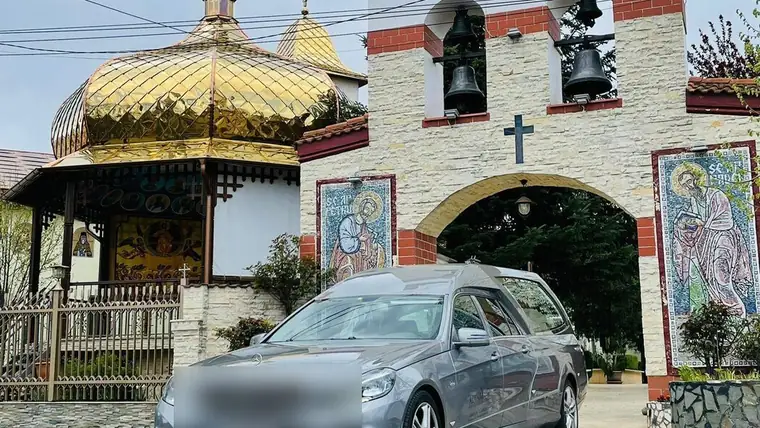
Exhumations in Liechtenstein are rare, and there are almost no ready-made guides for foreigners. Cemeteries belong to the municipalities (Gemeinde), while the state grants the exhumation permit. Here is how the process works and what a family in Ukraine needs to do to rebury a loved one at home. We manage the entire exhumation from Liechtenstein and bring the remains home to Ukraine. A body that has not been buried goes through repatriation from Liechtenstein instead.
In 30 seconds.
 Oleg Zdendiak, ownerpersonally responsible for every case
“You were always available, whatever the time…” — Віта Х. “Everything was organised with great dignity, professionally and with attention to every detail.” — Тамара Ю. “Every question was resolved promptly, with respect and attention to detail.” — Olha B. “…your support, compassion, sense of responsibility and professionalism meant a great deal to us.” — Ірина Б. “It all went quickly and professionally…” — Оля К. The request comes from the relatives. There is no ownership right to a grave in Liechtenstein. The Vaduz cemetery regulations clearly state that there is only a right of use (Benützungsrecht) for a grave or an urn niche. Therefore, the cemetery will deal with the person who arranged the funeral and under whose name the plot is recorded in the grave register (Grabkataster).
The Vaduz regulations allow relatives to request the closure of a grave (Grabauflösung) even before the resting period ends. The municipality has a short written form for this. It applies to the grave itself. For exhuming a body, this is not enough; a state permit is also required (see below).
If the family lives in Ukraine, there is usually no need to travel in person. We prepare the applications, and you sign a power of attorney. If the authority asks to confirm the family relationship, birth or marriage certificates translated into German will be needed. We check the exact list with the municipality where the person is buried.
We did not find a separate national burial law in the Liechtenstein legal database (Lilex). The rules are set by municipalities in their cemetery regulations. Here are two examples from official documents:
Official pages do not specify how to submit the application, how long the review takes, or whether a public health officer's report is needed. We clarify this with the local authority in each case. We will not promise a processing time in advance.
An important detail: on its portal, the Government of Liechtenstein directly advises contacting a funeral home when it comes to burial abroad. No separate state procedure "for relatives" is described there.
| Municipality | Resting period | Source |
|---|---|---|
| Vaduz | 25 years; family graves 50 years | Cemetery regulations, Art. 6 |
| Schaan | 25 years | Cemetery regulations, Sec. 10 |
| Balzers | 25 years | Municipal cemetery information |
In Vaduz, the cemetery supervisory board (Friedhofaufsicht) can shorten the period for valid reasons. In the regulations we reviewed, there is no minimum period after the funeral before an exhumation is allowed. So for requests like "exhumation after a year or two", the honest answer is: the authority granting the permit decides.
We found no seasonal restrictions in the regulations of Vaduz, Schaan, or Balzers. We check with the local authority whether the Chief Medical Officer will set any.
It is simpler with an urn. However, in Vaduz, only biodegradable urns are placed in the ground. Durable urns are used for urn niches. The municipal form for grave closure specifically includes the option "prepare the urn for collection" (for urn niches). Once the resting period expires, ashes from niches are moved to a communal grave (Gemeinschaftsgrab). It will no longer be possible to retrieve them from there, so do not delay.
The municipality does not dig up the grave for exhumation. The work is done by a funeral company on the family's instructions and within the terms of the permit. On-site conditions, the presence of relatives, and sanitary requirements are set by the authority that issued the permit. We clarify these in each case.
In Vaduz, burials take place in softwood coffins. Therefore, for transport to Ukraine, the remains are transferred into a new hermetically sealed transport coffin with a zinc liner, which is closed airtight.
Another option is to cremate the remains after exhumation and transport the urn. For regular burials, the municipality of Vaduz pays for cremation in Chur or St. Gallen (Switzerland), meaning cremation takes place there. For exhumed remains, we clarify the procedure. We will calculate both options.
Usually required:
Liechtenstein is a party to the Hague Apostille Convention (LGBl. 1987.060), so documents receive an apostille. Then we translate them into Ukrainian. Ukraine is represented in Liechtenstein by the Embassy of Ukraine in Switzerland (concurrently), with the consular section in Bern. We coordinate the accompanying border documents with them in each case. The general list is on the documents page.
A new burial in Ukraine also requires a permit. It is issued by the executive body of the local council at the place of the new burial. We can explain which papers the Ukrainian cemetery will ask for. We advise submitting the Ukrainian part in parallel with the Liechtenstein part. That way, the cemetery plot will already be waiting.
We did not find an official fee for exhumation. The Vaduz regulations state that a possible exhumation is paid for by the relatives, while the municipality only pays for regular burial services. The exhumation itself is not part of the municipality's work there, so the price is set by the funeral company. Separate fees apply for the death certificate (30 CHF), apostille, translations, the new coffin, and dismantling the headstone.
Our exhumation service costs from €500 plus the cost of transport (repatriation) from Liechtenstein. We calculate the exact amount for your situation. There is no prepayment for transport; payment is made after handover according to the contract.
| Stage | Estimated time |
|---|---|
| Consultation, identifying the municipality, grave type, year of burial | 1–3 days |
| Power of attorney, family documents | 1–2 weeks |
| Application and exhumation permit | clarified with the authority, from several weeks |
| Exhumation, new coffin, documents, apostille | 1–2 weeks |
| Transport to Ukraine | a few days |
| Reburial in Ukraine | as agreed with the cemetery |
Timelines depend on authorities beyond our control. With an urn, it is usually faster.
According to the cemetery regulations of the municipality of Schaan, the permit is granted by the Government of Liechtenstein or the Chief Medical Officer (Landesphysikus). The municipality where the grave is located must also be informed, as it maintains the grave register.
The Vaduz regulations allow relatives to request the closure of a grave during the resting period. For a body, a state permit is still required. Whether it will be granted in your case is decided by the authority.
In Vaduz, Schaan, and Balzers, it is 25 years. Family graves in Vaduz are granted for 50 years.
There is no official fee; the family pays, and the price is set by the company performing the work. Our exhumation service costs from €500 plus transport to Ukraine.
Yes, the Vaduz municipal form for grave closure specifically provides for the urn to be prepared for collection. After the resting period, the ashes are moved to a communal grave, so it is best not to delay.
Usually not. We work under a power of attorney. If the authority requires personal presence, we will let you know in advance.
We work 24/7, and are also available on Viber, WhatsApp, and Telegram.
Leave your number. We will call you back and tell you what to check about payment.