
Call +380 77 882 77 77Ask about exhumation
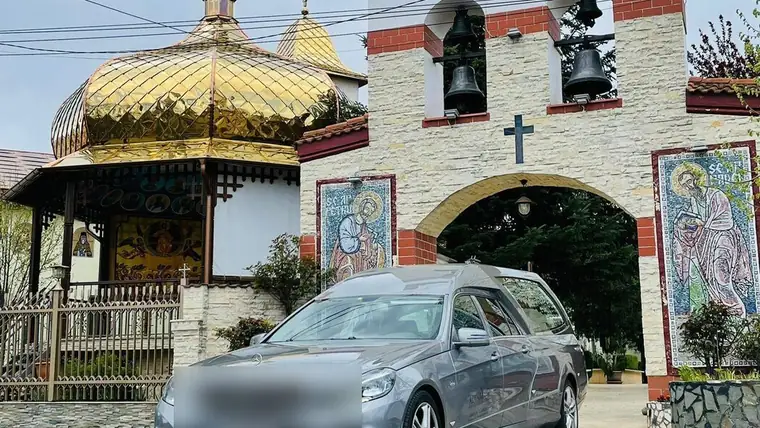
Your loved one is buried in Ireland, and your family wants to rebury them in Ukraine. Exhumation in Ireland ends with the same journey home as repatriation from Ireland, but it is possible only with a licence from the local county council. Councils specifically name moving remains abroad as one of the valid grounds. Below we explain who applies, what the fees are, and how we bring the remains home. We take care of every step of exhumation from Ireland to bring your loved one's remains home to Ukraine.
The short version, in 30 seconds.
 Oleg Zdendiak, ownerpersonally responsible for every case
“You were always available, whatever the time…” — Віта Х. “Everything was organised with great dignity, professionally and with attention to every detail.” — Тамара Ю. “Every question was resolved promptly, with respect and attention to detail.” — Olha B. “…your support, compassion, sense of responsibility and professionalism meant a great deal to us.” — Ірина Б. “It all went quickly and professionally…” — Оля К. A relative submits the application. The Fingal County Council form directly asks whether the applicant is the next of kin. If not, you must explain why they are not the one applying.
Councils refuse applications if there is no consent from the next of kin. This is stated in the Meath County Council procedure. Therefore, we collect written consents from the spouse, children, and parents to attach to the application.
Another mandatory consent is from the owner of the grave space. The form also asks whether anyone objects to the exhumation and why. If there is a dispute in the family, it is best to resolve it before applying.
You do not need to travel to Ireland. You sign a power of attorney and consent forms, and we pass them to our partners in Ireland. They submit the application to the council and make arrangements with the cemetery. Ukrainian documents for Irish authorities are usually translated into English. We check what the specific council requires before applying.
Exhumation is regulated by Section 46 of the Local Government (Sanitary Services) Act 1948, as amended by the Local Government Act 1994. Following these amendments, local councils issue the licences. Exhumation without a licence is an offence.
The application is submitted to the council's Environment Section. You must attach:
Meath County Council describes what happens next. The application is forwarded to the HSE Environmental Health department. An Environmental Health Officer inspects the grave, gathers details from the cemetery and the funeral director, and gives the council a recommendation with conditions. After this, the council grants or refuses the licence.
Councils will not grant a licence if the grave cannot be accurately identified, if the remains lie beneath another body that is not being exhumed, or if respect for the deceased and protection of public health cannot be ensured.
Councils do not state how long it takes to get a licence. It depends on the council and the HSE, so we clarify this for the specific cemetery.
There is no minimum period after burial mentioned in the sources we reviewed. We found no restricted seasons either. Councils state something else: exhumation is considered "only in exceptional circumstances". Among such circumstances, Carlow County Council lists a family's wish to move remains to another county or abroad.
The licence is valid for 12 months. Under Meath County Council rules, the exhumation must be carried out within this time. The date, time, and place must be reported to the HSE at least 5 working days in advance.
If the person had an infectious disease, this is taken into account in the HSE certificate. The inspector may set additional conditions.
Urn or coffin: a licence is required for both. Carlow and Dún Laoghaire-Rathdown councils explicitly state that this also applies to cremated remains.
Exhumation takes place only in the presence of an HSE inspector. Fingal County Council lists who may be present at the site: council staff, health service staff, police (Gardaí) or security, the funeral director, and gravediggers. Relatives are not on this list.
The inspector ensures that:
According to Meath County Council, the new coffin must be wooden, tarred on the inside, with a zinc liner and a leak-proof plastic membrane. The lid of the liner is sealed. A nameplate with the name and date of death is attached to the lid. For the journey to Ukraine, we prepare a hermetic transport coffin with a zinc liner that meets these conditions.
Sometimes a family wants to cremate the remains in Ireland and bring home an urn. This makes the journey simpler and cheaper. Whether this is possible for exhumed remains is decided by the council and the crematorium. We check this before submitting the application.
The Department of Foreign Affairs of Ireland places an apostille on Irish documents. Ukraine and Ireland are parties to the Hague Convention. We handle the translation into Ukrainian.
The Embassy of Ukraine in Ireland is in Dublin. Its consular section will advise which certificates are needed to bring the remains into Ukraine. We provide a full list of documents to every family.
A permit is also required in Ukraine. Reburial is authorised by the executive committee of the local council at the new burial place. We handle this part together with the family.
The Irish application form asks where exactly the remains will be reburied. Therefore, arrange a plot with the cemetery in Ukraine in advance and get a certificate confirming the plot. Upon arrival, we take the coffin to the cemetery or to the morgue, as agreed. How we transport bodies is described on the page repatriation of a body from Ireland.
Each council sets its own licence fee:
| Council | Exhumation licence fee |
|---|---|
| Offaly County Council | €113.50 |
| Carlow County Council | €300 |
| Fingal County Council | €750 + 23% VAT (€922.50), depends on the scope of work |
| Dún Laoghaire-Rathdown County Council | €2,500 |
Cemetery work, the new coffin, documents, translations, and the transport itself are paid separately. We check the prices of other councils for your specific case.
Our price: exhumation from €500 plus the cost of transport (repatriation) from Ireland. We calculate the exact amount for your situation. No prepayment for transport: payment is made after handover under the contract.
| Stage | Approximate time |
|---|---|
| Consultation, family consents, power of attorney | 1–3 weeks |
| Plot certificate in Ukraine | 1–2 weeks, in parallel |
| Council application, HSE grave inspection, licence | several weeks, sometimes longer |
| HSE notification and exhumation | at least 5 working days after notification |
| Export documents, apostille | 1–2 weeks |
| Transport to Ukraine | a few days |
| Executive committee permit and burial | 1–3 weeks |
Timelines are approximate and depend on the council, the HSE, and the cemetery. At every stage, we will tell you where things stand.
Yes, with a county council licence. Councils list moving remains abroad as one of the valid grounds. However, a licence is granted only in exceptional circumstances, so there is no guarantee.
The county or city council where the cemetery is located. Before a decision is made, the HSE health service assesses the application.
Yes. Councils explicitly state that a licence is also required for cremated remains.
Fingal County Council allows only council staff, the HSE, police or security, the funeral director, and gravediggers. For other cemeteries, we check in advance.
It depends on the council: from €113.50 in Offaly to €2,500 in Dún Laoghaire-Rathdown. Our work starts from €500 plus transport.
No. A power of attorney and written consents are enough. Our partners submit the application.
Call +380 77 882 77 77Ask about exhumation
Phone available 24/7, also on Viber, WhatsApp, Telegram.
Leave your number. We will call you back and tell you what to check about payment.