
Call +380 77 882 77 77Ask about exhumation
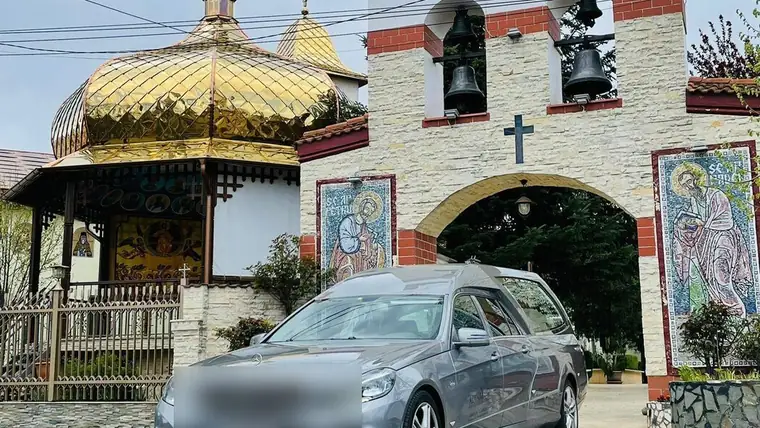
Exhumation in Greece is a standard practice, and this is the most important thing for a Ukrainian family to know. At many municipal cemeteries, a burial plot in the ground is granted for only three years. After that, an exhumation (εκταφή) is carried out and the bones are collected (ανακομιδή οστών). That is the easiest moment to bring your loved one back to Ukraine. Below we explain how this works and what documents are required. We handle every stage of exhumation from Greece and bring the remains home to Ukraine. For a recent death without a burial, the right page is repatriation from Greece.
In brief (30 seconds).
 Oleg Zdendiak, ownerpersonally responsible for every case
“You were always available, whatever the time…” — Віта Х. “Everything was organised with great dignity, professionally and with attention to every detail.” — Тамара Ю. “Every question was resolved promptly, with respect and attention to detail.” — Olha B. “…your support, compassion, sense of responsibility and professionalism meant a great deal to us.” — Ірина Б. “It all went quickly and professionally…” — Оля К. The National Registry of Administrative Procedures (mitos.gov.gr) explicitly states that the permit to transport bones or a body abroad is issued to the deceased's next of kin. An authorized representative can also submit the application: this requires a power of attorney from a close relative with a certified signature.
At the cemetery, the exhumation request is submitted by the next of kin or by the person who arranged the funeral and is listed on the deceased's record. For example, this is stated in the cemetery regulations of the Municipality of Mytilene (2026). If an early exhumation is requested before the standard period ends, these same regulations require written statements from all living first-degree relatives.
If the family is in Ukraine, traveling to Greece is usually not required. You sign a power of attorney, and we arrange the apostille and the translation into Greek.
The main rules are:
Permits are issued at two levels:
The official processing time is not specified; we check this with the local authority.
At many municipal cemeteries, ground burial lasts for three years. After that, relatives arrange the exhumation at their own expense and collect the bones. Sometimes the period can be extended for a fee. If relatives do not show up, the municipality can carry out the exhumation itself and move the bones to a communal ossuary. That is why it is important not to miss the notice from the cemetery.
Presidential Decree 210/1975 (Article 4) allows the transport of a body exhumed before three years have passed if decomposition is not complete. In this case, it is placed in a metal coffin filled with an absorbent material (sawdust, charcoal) soaked in an antiseptic and embalming fluid. However, cemeteries allow early exhumation only as an exception. In Mytilene, for example, the regulations specifically mention "special reasons (for example, a refugee)" and require the consent of the municipal council and a special fee at triple the standard rate. We check how this works at your specific cemetery with the local authority.
If a person died of an infectious disease not covered by the International Health Regulations (the decree lists measles, scarlet fever, and whooping cough as examples), exhumation is possible only after three years (Article 2). If the disease falls under these regulations, transporting the body is prohibited, and exhumation is forbidden until ten years have passed (Article 3).
The date and time are set by the cemetery. The Mytilene regulations require the presence of relatives or the person arranging the procedure. Anyone who does not wish to attend submits a written statement. We can be there on your behalf.
After three years, the bones are cleaned and disinfected. For transport, the decree requires disinfection with an antiseptic, odor removal, and an airtight metal box (Article 4). A disinfection certificate is issued by the sanitary service. If the body has not yet decomposed, it is placed in a new airtight metal coffin for transport.
Cremation after exhumation in Greece is technically possible, but we have not separately verified the procedure for an already buried body. We clarify this with the local authority.
For bones (according to mitos.gov.gr):
For a body: the same documents, except that the disinfection certificate is replaced by an embalming certificate (βεβαίωση ταρίχευσης). Whether this is required for an exhumed body is something we verify with the Directorate of Public Health.
Greek documents receive an apostille, and then we translate them into Ukrainian. Before departure, we coordinate the accompanying documents with the Embassy of Ukraine in Greece. You can find the general list on the documents page.
For a new burial in Ukraine, you need a permit from the executive body of the local council at the new burial place. Bones or an urn are usually buried in an existing family grave. We explain how to get the permit in the article on exhumation and reburial in Ukraine.
Fees are set by each municipal council: for the three-year burial, extension, exhumation, and keeping bones in the ossuary. There is no single rate; we check the exact amount with the local authority. Disinfection, the metal box or coffin, apostilles, and translations are paid separately.
Transporting bones in a small box usually costs less than transporting a body in a coffin: the weight and size are much smaller, and the transport requirements are simpler. We will calculate the exact difference after speaking with you, once we know the city and the cemetery.
Our exhumation service costs from 500 € plus the cost of transport (repatriation) from Greece. We calculate the exact amount for your situation. For transport, we work without advance payment: you pay after hand-over according to the contract. Read more about transport on the repatriation of a body from Greece page.
| Stage | Estimated time |
|---|---|
| Initial call, checking the cemetery and the end date of the three-year period | 1–3 days |
| Power of attorney, apostille, translation | 1–2 weeks |
| Exhumation date at the cemetery | per the cemetery's schedule |
| Disinfection, certificate, metal box | 1–2 weeks |
| Transport permit from the Directorate of Public Health | confirmed with the authority |
| Transport and reburial in Ukraine | a few days, then as arranged |
These are our estimates. Timelines depend on authorities beyond our control. If only a few months remain until the end of the three-year period, it is often wiser to wait.
Yes. It is easiest after three years of burial, when the cemetery carries out the exhumation and bone collection anyway. To take the remains out of the country, you need a permit from the Regional Directorate of Public Health.
The cemetery notifies the relatives. If no one responds, the municipality may carry out the exhumation itself and place the bones in a communal ossuary. After that, recovering your specific relative will be very difficult.
Only as an exception, with a special permit. In that case, the body is transported in a metal coffin with an absorbent material soaked in antiseptic.
Fees are set by each municipality. Our exhumation service costs from 500 € plus transport to Ukraine. Transporting bones is usually cheaper than transporting a body.
We verify the procedure for cremation after exhumation with the local authority. For transporting ashes, the decree requires a tightly sealed container.
Usually not. A power of attorney with an apostille and translation is sufficient.
We work 24/7, and can also be reached on Viber, WhatsApp, and Telegram.
Leave your number. We will call you back and tell you what to check about payment.