
Call +380 77 882 77 77Ask about exhumation
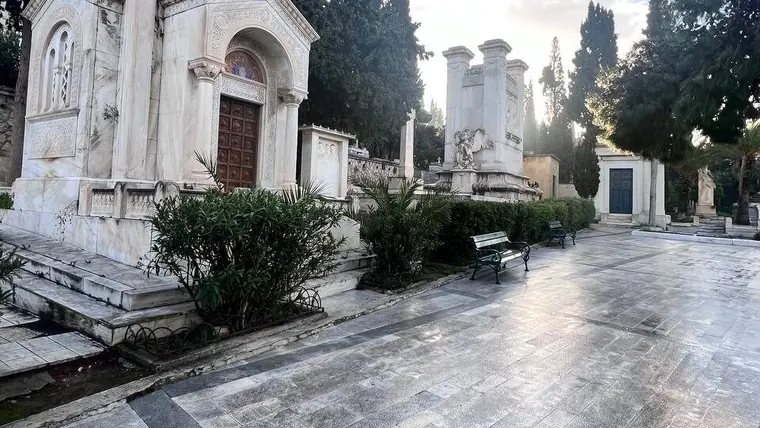
Exhumation in Estonia is permitted by law, and the rules here are shorter than in many other countries. Reburial (ümbermatmine) takes place by agreement with the cemetery administrator, who also organizes the process. Below, we explain what the law says, how much time must pass after burial, and what is needed to bring a loved one to Ukraine. Our specialists deal with the administrator on your behalf and arrange the transport to Ukraine. If there has been no burial yet, the page on repatriation from Estonia is the one you need.
In 30 seconds.
 Oleg Zdendiak, ownerpersonally responsible for every case
“You were always available, whatever the time…” — Віта Х. “Everything was organised with great dignity, professionally and with attention to every detail.” — Тамара Ю. “Every question was resolved promptly, with respect and attention to detail.” — Olha B. “…your support, compassion, sense of responsibility and professionalism meant a great deal to us.” — Ірина Б. “It all went quickly and professionally…” — Оля К. In Estonia, every grave has a burial plot user (hauaplatsi kasutaja). The law explains that this is the person who holds the written consent of the cemetery administrator to use the plot. If the user has died, the deceased's next of kin (omaksed) have the priority right to the plot: spouse, registered partner, parents, adult children, and siblings.
The law does not separately specify who must sign the reburial application. In practice, the cemetery administrator makes arrangements with the burial plot user. Therefore, we first find out who is registered as the user and whether other close relatives agree. If there is a dispute within the family, it is best to resolve it before applying.
If the family is in Ukraine, traveling to Estonia is usually not required. You sign a power of attorney before a notary, and we obtain the apostille, translate it, and handle the process with the cemetery.
All the main rules are in the Cemeteries Act (Kalmistuseadus, version in force from 01.01.2024):
The Cemeteries Act does not require a separate state permit for reburial. The law mentions state supervision by the Health Board (Terviseamet) for particularly dangerous infectious diseases. We check with the local authority whether Terviseamet approval is needed in your case.
The cemetery administrator is usually the local government, a parish, or another owner of the cemetery. Each cemetery has its own rules of use (kalmistu kasutamise eeskiri), which may include specific requirements for the application. We check these at the specific cemetery. Contacts for cemeteries across the country are listed on the kalmistud.ee portal. The law does not set a processing time.
The law sets specific waiting periods for a coffin (§ 9 (16)):
The administrator will tell you what type of soil is at your cemetery. The law does not set such waiting periods for an urn.
If the grave holds several burials. The law allows a new burial on top of a coffin no earlier than 20 years after the last burial in that place (§ 9 (11)). If older remains are found while digging, they are reburied in a pit at the bottom of the same grave, and an intact coffin is left untouched (§ 9 (10)). So in a family grave, someone else may lie above your relative. Before applying, we check with the cemetery who was buried in this place and when.
There are no seasonal bans in the law. In winter, work may be postponed due to frozen ground, which is decided by the cemetery.
Infectious diseases. If death was caused by a particularly dangerous disease (yellow fever, viral hemorrhagic fevers, smallpox, plague, anthrax), the body must be wrapped in a shroud soaked in antiseptic for transport abroad (§ 3 (2)). We check other conditions for exhumation in such cases with Terviseamet.
The work is organized by the cemetery administrator. The funeral home, meaning us or our partner in Estonia, prepares a new coffin and collects the remains. The law requires that reburial be carried out with dignity, taking into account the religion and culture of the deceased (§ 9 (1)). We check with the cemetery whether the family can be present.
To transport remains out of Estonia, the law requires (§ 3 (2)):
We refer to this as a hermetically sealed transport coffin with a zinc liner. The law applies these requirements to any transport of a body out of Estonia.
Cremation after exhumation: the law does not mention this separately. Whether it is possible in your case is something we check with the local authority and the crematorium.
Since 2010, apostilles on Estonian documents have been issued by notaries, and an electronic apostille is also available. Next, we translate the documents into Ukrainian. Before departure, we coordinate the accompanying documents with the Embassy of Ukraine in Estonia. A general list is available on the documents page.
For a new burial in Ukraine, a permit is required from the executive body of the local council at the place of the new burial. We prepare this part in parallel with the Estonian side to avoid delays. We explain how to get the permit in the article exhumation and reburial in Ukraine.
There is no single state fee. Each cemetery sets its own price list, so we check the cost with the local authority for the specific cemetery. Paid separately:
Our exhumation service costs from 500 € plus the cost of transport (repatriation) from Estonia. We calculate the exact amount for your specific situation. For transport, we work without advance payment: you pay after delivery according to the contract. Read about the transport itself on the repatriation of a body from Estonia page.
| Stage | Estimated time |
|---|---|
| Consultation, checking the cemetery, plot user, and time since burial | 1–3 days |
| Power of attorney, apostille, translation | 1–2 weeks |
| Agreement with the cemetery administrator | from a few days to a few weeks |
| Documents for the plot in Ukraine | 1–2 weeks, in parallel |
| Exhumation and coffin preparation | according to the cemetery's schedule |
| Transport to Ukraine | a few days |
| Reburial | by agreement with the cemetery |
These are our estimates. Timelines depend on the cemetery and authorities beyond our control. If less than a year has passed since the burial (or three years in moist soil), you will have to wait.
Yes. Reburial takes place by agreement with the cemetery administrator. For export, a hermetically sealed zinc coffin in a wooden box is required.
For a coffin, at least one year in sandy soil and three years in moist soil. For an urn, the law sets no waiting periods.
The cemetery administrator, usually the local government or parish. The Cemeteries Act does not require a separate state permit, but Terviseamet supervision applies for dangerous infections.
Yes. The law does not set waiting periods for an urn. We check the procedure for releasing the urn with the cemetery.
Each cemetery has its own price list. Our exhumation service costs from 500 € plus transport to Ukraine.
Only your relative is moved. Whether this can be done without disturbing the other burials is assessed by the cemetery on site. It is best to have the other close relatives' consent in writing.
Usually not. A power of attorney with an apostille is enough.
We work 24/7, and are also available on Viber, WhatsApp, and Telegram.
Leave your number. We will call you back and tell you what to check about payment.