
Call +380 77 882 77 77Ask about an urn
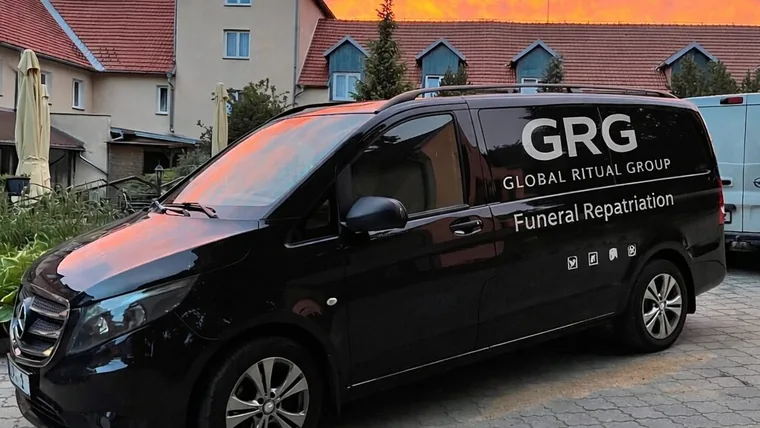
In Latvia, cremation for a Ukrainian is arranged the same way as for a Latvian citizen. It is one of two ways home, the other being repatriation from Latvia. The procedure is set by the Cabinet of Ministers regulations on cremation (Kremācijas noteikumi, No. 600). They are brief and clear: an application to the crematorium, a death certificate, and in a few days, the urn. Here we explain how it works and how to bring the urn with ashes to Ukraine.
Briefly in 30 seconds.
 Oleg Zdendiak, ownerpersonally responsible for every case
“You were always available, whatever the time…” — Віта Х. “Everything was organised with great dignity, professionally and with attention to every detail.” — Тамара Ю. “Every question was resolved promptly, with respect and attention to detail.” — Olha B. “…your support, compassion, sense of responsibility and professionalism meant a great deal to us.” — Ірина Б. “It all went quickly and professionally…” — Оля К. Regulations No. 600 do not establish a hierarchy of relatives. The application can be submitted by the deceased's spouse, their relatives, or another person organizing the burial. They present an identity document and become the applicant (iesnieguma iesniedzējs).
Much depends on the applicant. It is to this person that the crematorium releases the ashes, and they decide what happens to the urn next. A Latvian lawyer on the state portal LV portāls advises relatives to agree in advance on who will take on this role. If an agreement cannot be reached, the dispute is settled in court.
Citizenship does not matter. The application includes the personal code (personas kods) of the deceased. If there is no code, the crematorium will advise on how to fill out the application.
Traveling to Latvia is not mandatory. The capsule with ashes can be released to a person authorized by the applicant. You issue a power of attorney, and our partners in Latvia submit the application, make arrangements with the crematorium, and collect the urn. We verify whether a Latvian translation of the Ukrainian power of attorney and notarization are required before submission.
The regulations do not require a separate city hall permit for cremation. Cremation takes place once the crematorium receives the application and documents.
The application must state:
A copy of the death certificate is attached to the application, while the original is shown. The certificate is issued by the Civil Registry Office (dzimtsarakstu nodaļa). If criminal proceedings have been initiated regarding the death, a permit from the prosecutor supervising the investigation is also required.
By signing the crematorium register, the applicant confirms that there are no items on the body that could cause a hazardous reaction during incineration. If the person had a pacemaker, be sure to mention this in advance.
Another requirement: cremation is only performed in a coffin made of natural, easily combustible material. Without a coffin, cremation will not take place.
Regulations No. 600 do not set a minimum waiting period between death and cremation. The main requirement is having the death certificate. Therefore, time is spent primarily on registering the death and waiting for an available slot at the crematorium.
The regulations set no deadline for releasing the urn. We confirm the exact date with the crematorium.
Do not delay after the cremation. The crematorium stores the capsule with ashes for 45 days. If the applicant or their representative does not collect it within this time, the ashes will be buried in an area for the deceased without relatives or scattered.
We did not find an official public price list for crematoriums, so we do not quote specific figures. According to the publication Kas Jauns (March 2025), three crematoriums operate in Latvia: in Riga, Saldus, and Valmiera. The Riga crematorium is located in a city-owned building, operated by a private company.
Each crematorium sets its own prices. The coffin is paid for separately: cremation is not performed without one. We check the exact amount for a specific date with the crematorium.
If we organize the cremation through local partners, we calculate the cremation cost based on your situation. If the urn is already ready, we simply collect it.
Transporting an urn with ashes to Ukraine costs from 800 €. We work without prepayment: payment is made after the urn is handed over under the contract. Details are on the urn transport page.
Latvian regulations describe not a decorative urn, but a capsule (kapsula). It is durable, airtight, and watertight, and it is sealed and numbered. The cremation record number, name, dates of birth and death, and the place and date of cremation are written on the capsule. A heat-resistant numbered tag that went through the cremation with the body is also placed inside the capsule.
The capsule can be placed inside a decorative urn. For travel, a sturdy metal or wooden urn without glass is best. The Latvian Ministry of Foreign Affairs has noted that under international practice, an urn with ashes can usually be carried in hand luggage. However, each airline sets its own rules, so we clear the urn with the carrier in advance. At security control, it is screened by X-ray.
Cabinet of Ministers Regulations No. 523 require a permit from the Health Inspectorate (Veselības inspekcija) to transport a body out of the country. They do not mention ashes. We found no separate permit requirement for exporting an urn in the Latvian regulations.
The urn must be accompanied by:
Latvia and Ukraine are parties to the Hague Apostille Convention. Since July 1, 2019, apostilles on Latvian documents have been issued by sworn notaries (zvērināts notārs). We check with the Embassy of Ukraine in Latvia whether your cemetery in Ukraine requires one. The full list is on the documents page.
Transport can be done by plane or overland via Lithuania and Poland. By land, the urn is under supervision the entire time. Read more about border procedures in the article customs clearance for an urn.
Yes. The capsule is released to the applicant or a person holding their power of attorney. A relative can collect it and travel with it themselves.
Where problems can arise: the name in the Latvian documents is spelled differently than in the passport; there is no translation; the urn was not cleared with the airline; the 45-day period is expiring and there is no one to pick up the urn. If you cannot travel, it is better to entrust this to us.
| Urn with ashes | Body in a coffin | |
|---|---|---|
| Documents | death certificate, cremation certificate, translation | death certificate, Veselības inspekcija permit, certificates |
| Transport | passenger car or plane | specialized vehicle, hermetically sealed coffin |
| Timelines | a few days after cremation | depend on permits and transport |
| Price | from 800 € | see the country page |
If the family wishes to bury the body, read about body transport from Latvia.
The urn can be buried in a separate grave, placed in a columbarium, or interred in a family grave. You will need the cemetery's consent and the documents we bring with the urn. Read more in the article urn burial.
| Stage | Estimated time |
|---|---|
| Consultation, power of attorney | 1–3 days |
| Death certificate | 1–3 days |
| Application and cremation | a few days |
| Urn release, certificates, translation | 3–5 business days |
| Urn transport to Ukraine | 1–3 days |
| Urn burial | as arranged with the cemetery |
Timelines are approximate. They depend on government authorities, the prosecutor's office, and the crematorium's schedule.
Yes. The regulations make no distinction based on citizenship. An application to the crematorium and a copy of the death certificate are required.
A spouse, relatives, or another person organizing the funeral. If the family is in Ukraine, the urn can be released to a person holding a power of attorney.
We did not find an official price list, so we check the price with the crematorium for a specific date. Transporting the urn to Ukraine costs from 800 €.
We found no separate permit requirement in the Latvian regulations. A Veselības inspekcija permit is required for a body. An urn is accompanied by the death certificate, the cremation certificate, and a translation.
45 days after cremation. After that, the ashes are buried in an area for the deceased without relatives or scattered.
Usually yes, in hand luggage, but only with the airline's prior approval. Each carrier has its own rules.
We are available 24/7, including on Viber, WhatsApp, and Telegram.
Leave your number. We will call you back and tell you what to check about payment.