
Call +380 77 882 77 77Ask about an urn
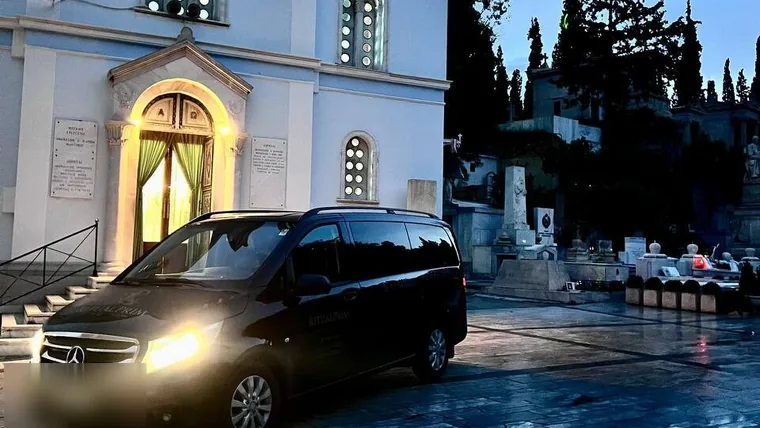
Cremation in Lithuania is available for a Ukrainian citizen under the same conditions as for a Lithuanian, and families who prefer it to repatriation from Lithuania bring home an urn. The Law on the Burial of Human Remains (Žmonių palaikų laidojimo įstatymas) describes in detail who makes the decision and what documents to bring to the crematorium. For a family from Ukraine, there is one important detail: the document proving kinship. Here is a step-by-step explanation of the process and how to bring the urn with ashes home.
In 30 seconds.
 Oleg Zdendiak, ownerpersonally responsible for every case
“You were always available, whatever the time…” — Віта Х. “Everything was organised with great dignity, professionally and with attention to every detail.” — Тамара Ю. “Every question was resolved promptly, with respect and attention to detail.” — Olha B. “…your support, compassion, sense of responsibility and professionalism meant a great deal to us.” — Ірина Б. “It all went quickly and professionally…” — Оля К. First, the wishes of the deceased are considered. A person can agree to or refuse cremation in a will, in another notarized document, or in a tripartite agreement with the crematorium. If they refused it during their lifetime, cremation is not allowed.
If no wishes were expressed, the application is submitted by the spouse, partner, or other adult relatives. They confirm in writing that the person did not object to cremation during their lifetime. This person becomes the "person arranging the burial" (laidojantis asmuo).
When relatives disagree, the decision is made in the following order:
If people of the same rank disagree, for example two children, the law prohibits cremation. The body is then buried in the ground.
For the Lithuanian crematorium, the applicant shows a passport or a residence permit in Lithuania. If no one from the family can travel, our partners act under your power of attorney. Whether the crematorium will accept an application from a representative by power of attorney is something we clarify before starting.
The law does not require a separate municipal permit for cremation. The application is filled out on the crematorium's form and accompanied by:
If there is no consent from the deceased, you also need:
For Ukrainians, this is where most of the work lies. A marriage or birth certificate is issued in Ukraine. Whether a Lithuanian translation and an apostille on Ukrainian documents are needed is something we check with the crematorium in advance.
A prosecutor's consent is required if the death certificate indicates that the police had to be notified of the death. Without it, cremation is prohibited. An unidentified person cannot be cremated.
If documents are missing, the crematorium refuses within 24 hours. Once you provide the missing documents, the cremation can proceed.
The law prohibits cremation on the day of death. There are no other minimum waiting periods.
The crematorium in Kėdainiai operates 24/7, without days off, and shows available time slots on its website for several days ahead. The procedure itself takes 2.5 to 3 hours. While documents are being collected, the body is kept in a refrigerated chamber.
Most often, time is spent not on waiting in line, but on documents: the death certificate, proof of kinship, and consents from relatives. If the police are investigating the death, the wait is longer.
The crematorium near Kėdainiai (Lietuvos krematoriumas, AB K2 LT) has been operating since 2011. According to LRT (2024), there are competitors in Klaipėda and Vilnius. Prices at Lietuvos krematoriumas including VAT:
| Service (in Lithuanian) | What it is | Price |
|---|---|---|
| Pagarbus ritualinis kremavimas per 48 val. | cremation within 48 hours | 310 € |
| Pagarbus ritualinis kremavimas | cremation at a time chosen by the family | 382 € |
| Kapsulė kremuotiems palaikams | metal capsule for ashes | 9 € |
| Palaikų saugojimas | body storage in a refrigerator, per day | 15 € |
| Pakartotinis kremavimo pažymos išdavimas | duplicate of the cremation certificate | 30 € |
Source: Lietuvos krematoriumas: paslaugos ir kainos
The coffin, urn, body transport to Kėdainiai, and farewell hall are paid for separately. Funeral homes often sell cremation as a package together with body delivery.
If we organize the cremation through local partners, we calculate the cremation cost based on your situation. If the urn is already ready, we simply pick it up.
Transporting an urn with ashes to Ukraine costs from 800 €. We work without prepayment: payment is made after the urn is handed over according to the contract. Details are on the urn transport page.
The law requires a shatterproof capsule that is impervious to light and liquid. The crematorium engraves on it the name and personal code of the deceased, dates of birth and death, the crematorium code, the date of cremation, and the register number. Using these details, the urn can be easily matched with the documents at the border.
The capsule can be placed inside a decorative urn. For travel, a sturdy urn made of metal or wood, without glass, is better. If traveling by plane, the urn is usually taken in carry-on luggage by prior arrangement with the airline. At security, it is screened by X-ray. Each airline sets its own rules.
Lithuanian law requires a transit permit (laissez-passer) to take a body out of the country. We did not find a requirement for a separate permit to export ashes in the law.
After cremation, the crematorium releases the ashes upon application along with a cremation certificate (kremavimo pažyma). The certificate lists the name, personal code, date of cremation, and the name, address, and phone number of the crematorium. The crematorium records in its register which cemetery the ashes will be buried in. Therefore, name the cemetery in Ukraine in advance.
The urn must be accompanied by:
Lithuania and Ukraine are parties to the Hague Apostille Convention. Whether your cemetery in Ukraine requires an apostille is something we verify with the Embassy of Ukraine in Lithuania. The full list is on the documents page.
Transport can be done by plane or by land through Poland. By land, the urn is under supervision the entire time. Read more about the border in the article on customs clearance for an urn.
Yes. The ashes are released to the person arranging the burial or to someone holding their power of attorney. The law even allows keeping the urn at home temporarily.
Where problems happen: there is no translation; the name on the Lithuanian certificate is spelled differently than in the passport; the urn was not cleared with the airline in advance. If time is short or you cannot travel, it is better to entrust this to us.
| Urn with ashes | Body in a coffin | |
|---|---|---|
| Documents | death certificate, cremation certificate, translation | death certificate, laissez-passer, translations |
| Transport | passenger car or plane | specialized vehicle, hermetic coffin |
| Timeframe | a few days after cremation | depends on documents and transport |
| Price | from 800 € | see the country page |
If the family wants to bury the body, read about body transport from Lithuania.
The urn can be buried in a separate grave, placed in a columbarium, or buried in an existing family grave. You need permission from the cemetery and the documents we bring with the urn. Read more in the article on urn burial.
| Stage | Estimate |
|---|---|
| Consultation, power of attorney, kinship documents | 2-7 days |
| Death certificate | 1-3 days |
| Cremation | no earlier than the day after death |
| Certificate, translation | 1-5 days |
| Urn transport to Ukraine | 1-3 days |
| Urn burial | by arrangement with the cemetery |
Timeframes are approximate. They depend on authorities, the prosecutor's office, and how quickly the family gathers the documents.
Yes. The law makes no distinction based on citizenship. An application, a death certificate, and the applicant's documents are required.
A spouse or another close relative submits the application. If relatives disagree, the decision is made in the following order: spouse, children, parents, brothers and sisters, grandparents and grandchildren.
At Lietuvos krematoriumas, it is 310 € within 48 hours or 382 € at a chosen time, and the capsule is 9 €. Transporting the urn to Ukraine costs from 800 €.
No. The law prohibits cremation on the day of death.
We did not find a requirement for a separate permit in the law. A laissez-passer transit permit is required for a body. An urn is accompanied by the death certificate, the cremation certificate, and a translation.
A relative of a closer rank makes the decision. If people of the same rank disagree, the law prohibits cremation.
We are available 24/7, including on Viber, WhatsApp, and Telegram.
Leave your number. We will call you back and tell you what to check about payment.